 AWS
AWS Amazon Bedrock
 Lambda
 S3
S3 Node.js


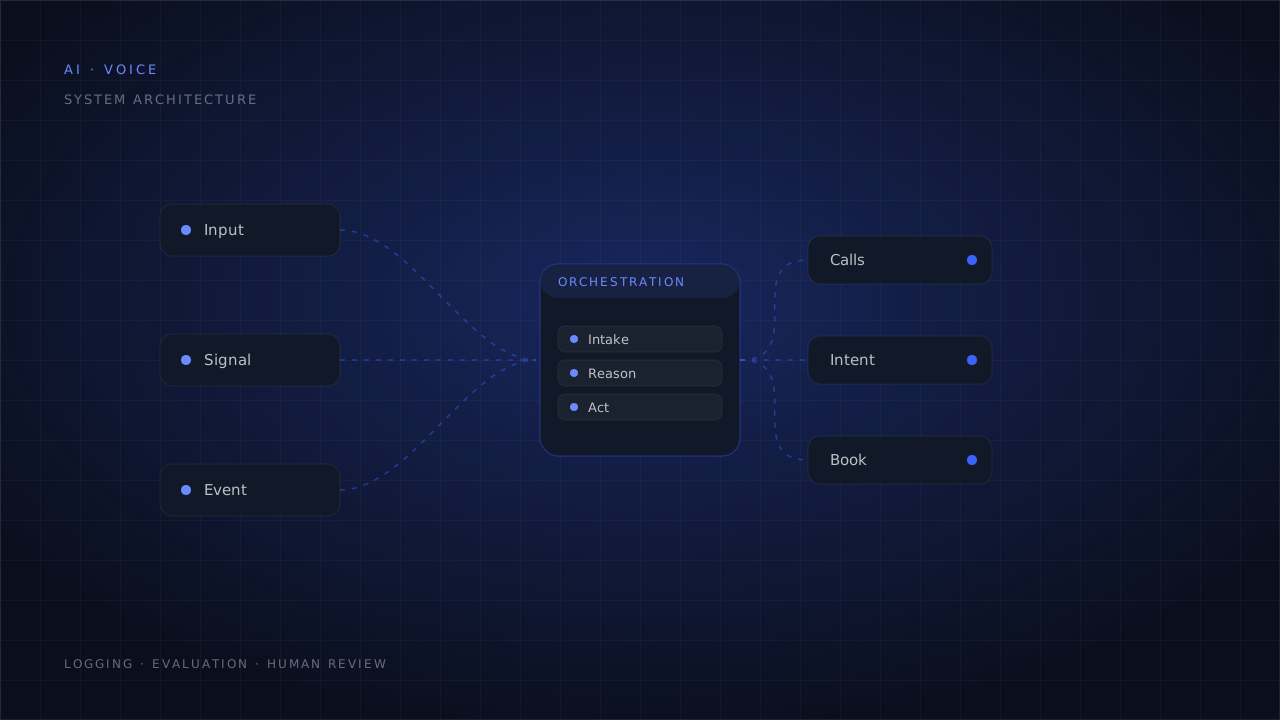
AI / Voice / Multi-Agent
VeriVoice
An intelligent multi-agent voice platform designed to automate business conversations and workflows.
- React
- Next.js
- Node.js
- AI
- +1
 React
React Next.js
View Case Study
Case Study / AI / Compliance
ReportAI / ForensicReports / 12 weeks
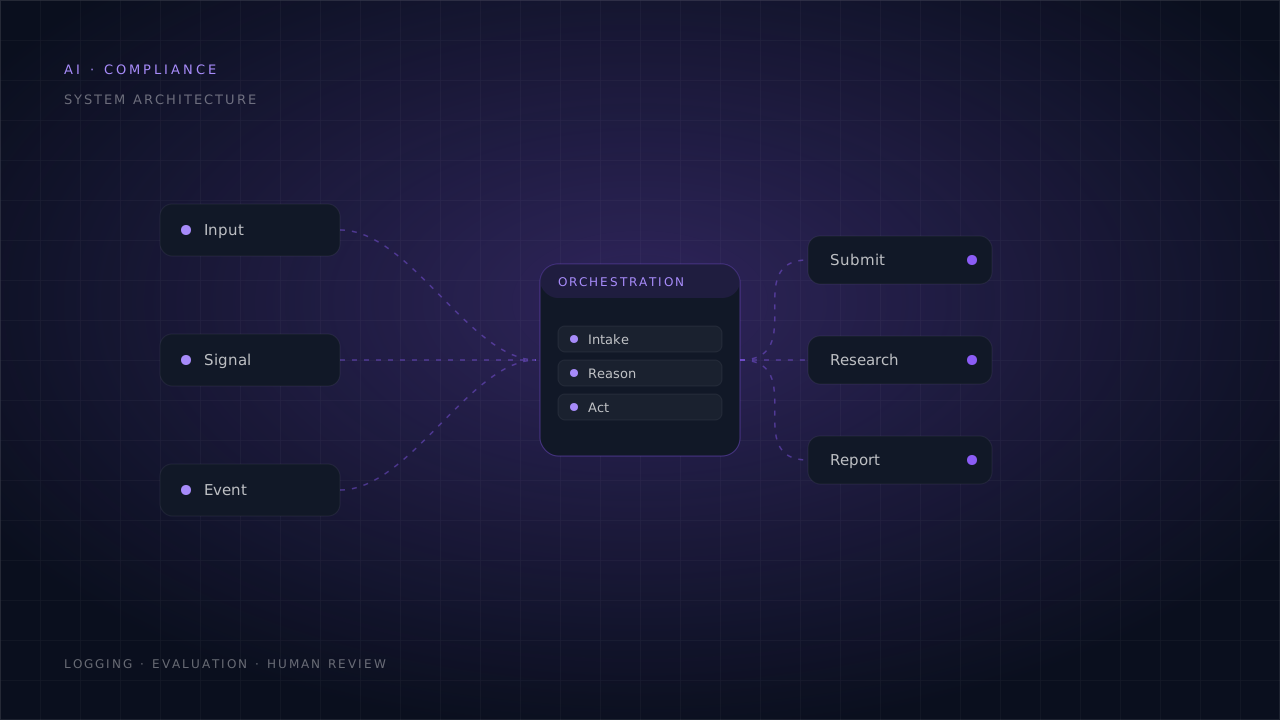
A serverless AI-powered due diligence platform that automates company research, regulatory data collection, risk analysis, entity matching, and forensic report generation using AWS and generative AI.
Overview
The project required a scalable due diligence platform capable of collecting information about companies from multiple external sources, validating and normalizing the collected data, performing AI-assisted analysis, and producing comprehensive integrity due diligence reports. Traditional manual due diligence requires analysts to search multiple registries, sanctions databases, news sources, corporate records, and other public datasets before manually consolidating the findings into a report. The objective was to turn that fragmented process into a reliable, asynchronous and AI-powered workflow where a user submits a company once and the platform handles the research, processing, analysis and report generation automatically.
Challenge
The situation before the engagement, in the client's terms.
The platform needed to solve a fundamental problem in corporate due diligence: relevant information is distributed across many sources, while the final report needs to present that information as one coherent, evidence-based assessment.
Company information can be distributed across corporate registries, sanctions databases, PEP sources, adverse-media providers, news APIs and other third-party services.
Due diligence requests can require multiple external API calls and substantial AI processing. Running everything inside a synchronous HTTP request could lead to timeouts, poor reliability and a poor user experience.
Raw research data is difficult to consume directly. The system needed to transform structured and unstructured evidence into a consistent, professional due diligence report.
External APIs can fail, respond slowly or become unavailable. The architecture needed retries, queue-based processing, status tracking and a dead-letter mechanism.
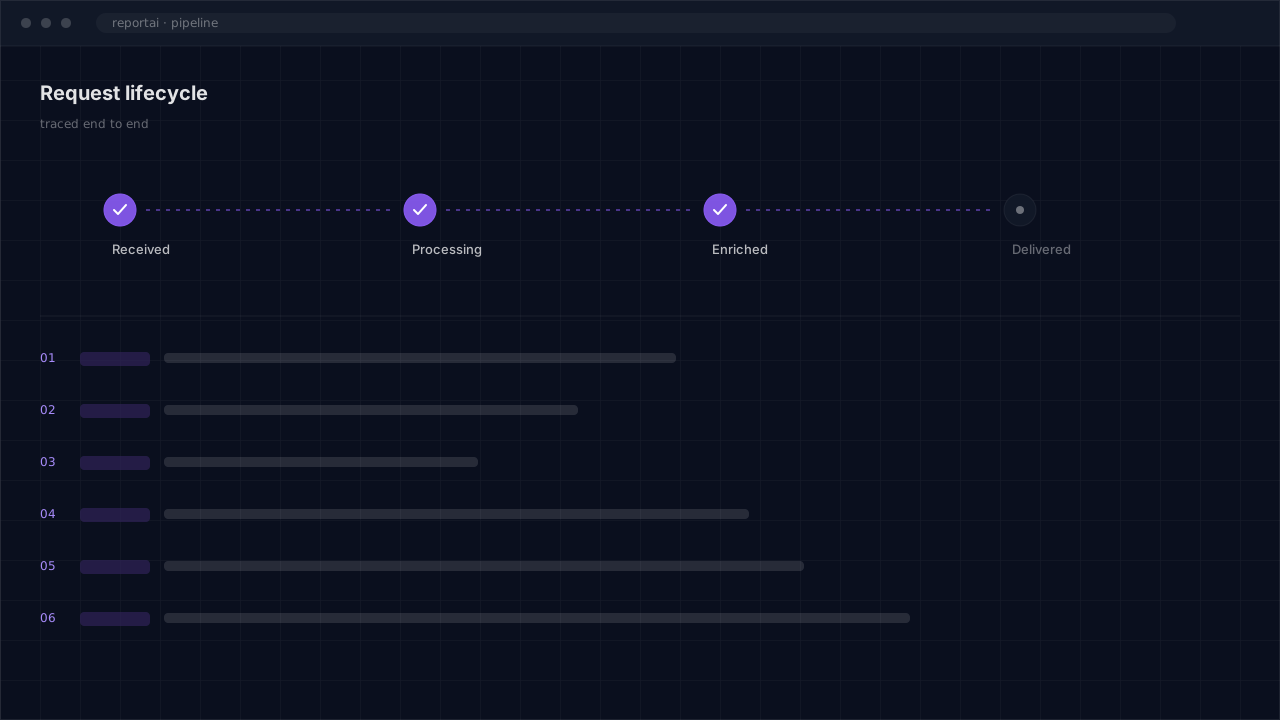
Every report needed a reliable lifecycle: Request → Processing → Research → AI Analysis → Storage → Status → Retrieval.
Objectives
What the build needed to achieve before implementation began.
Automate the collection of company and regulatory information
Integrate multiple external intelligence and registry APIs
Decouple long-running processing from the user-facing API
Generate structured due diligence reports using generative AI
Store generated reports securely and durably
Track report status throughout the complete processing lifecycle
Handle failed jobs through retries and a dead-letter queue
Build an architecture capable of scaling as report volume increases
Provide a foundation for Level 1, Level 2 and Level 3 due diligence workflows
Solution Design
The approach that addressed each challenge above.
We designed the platform as an event-driven AWS serverless architecture. Instead of keeping the user request open while the entire research and AI pipeline executes, the platform immediately creates a report request, places the work onto Amazon SQS, and processes the request asynchronously through Lambda workers — separating the API layer from the heavy processing layer so the system scales independently.
Amazon API Gateway provides the public API layer. A client submits company information through POST /companyData, a Node.js 20.x Lambda request handler validates it, creates the report record and sends the message to SQS — the client receives an immediate response with the report ID.
Amazon SQS acts as the processing buffer between the request layer and worker layer, providing decoupling, reliable delivery, retries, traffic buffering, independent scaling and fault tolerance.
A separate Lambda worker consumes messages from SQS and orchestrates the research workflow — retrieving the request, calling external data sources, aggregating and normalizing the evidence.
The worker integrates News APIs, NewsData.io, MediaStack, Companies House, OpenSanctions, OFAC Trade API, SerpAPI and other registry and intelligence APIs, querying relevant sources selectively by entity and jurisdiction.
Once research data is normalized, the worker passes evidence to Amazon Bedrock, which converts it into a structured forensic report — executive summary, company identification, business operations, entity matching, ownership, risk assessment, sanctions & PEP, adverse media and appendices.
Generated reports are stored in Amazon S3, providing durable access to report artifacts including HTML/PDF outputs and a clean separation between report generation and retrieval.
Amazon DynamoDB maintains report metadata and processing state — report ID, company information, processing status, report location, timestamps and lifecycle data — so the frontend can query status without touching the worker.
A separate retrieval flow queries DynamoDB, generates pre-signed S3 URLs where required, and returns the report information or document location — keeping generation independent from consumption.
Capabilities
What ReportAI / ForensicReports does in day-to-day use.
A single company request can trigger research across multiple external intelligence and regulatory sources.
Information from different APIs is collected, normalized and prepared for analysis within a unified processing workflow.
Amazon Bedrock analyzes the collected evidence and generates a structured forensic report.
Findings are organized into risk categories with an overall risk assessment suitable for review.
Evaluates whether information from different sources belongs to the same underlying entity, with confidence surfaced when evidence supports it.
Sanctions and politically exposed person information incorporated through connected intelligence sources.
News and media sources collected and analyzed to identify potentially relevant adverse information.
Ownership and related-entity information represented where reliable source data is available.
Long-running workflows execute outside the request-response cycle through SQS and Lambda.
Failed attempts retried automatically; messages exceeding retry limits routed to an SQS Dead Letter Queue.
Generated reports stored in Amazon S3 rather than inside the application server.
Completed reports retrieved through dedicated APIs without rerunning the research workflow.
Technology Stack
Outcome
What changed for the business after launch.
Serverless
Event-driven pipeline
SQS decouples the request lifecycle from research and AI processing.
Multi-source
Intelligence aggregation
Registries, sanctions, PEP and news sources queried per request.
Bedrock
AI report generation
Structured due diligence reports from aggregated evidence.
DLQ
Controlled failure handling
Retries and a Dead Letter Queue isolate failed jobs for investigation.
Interface
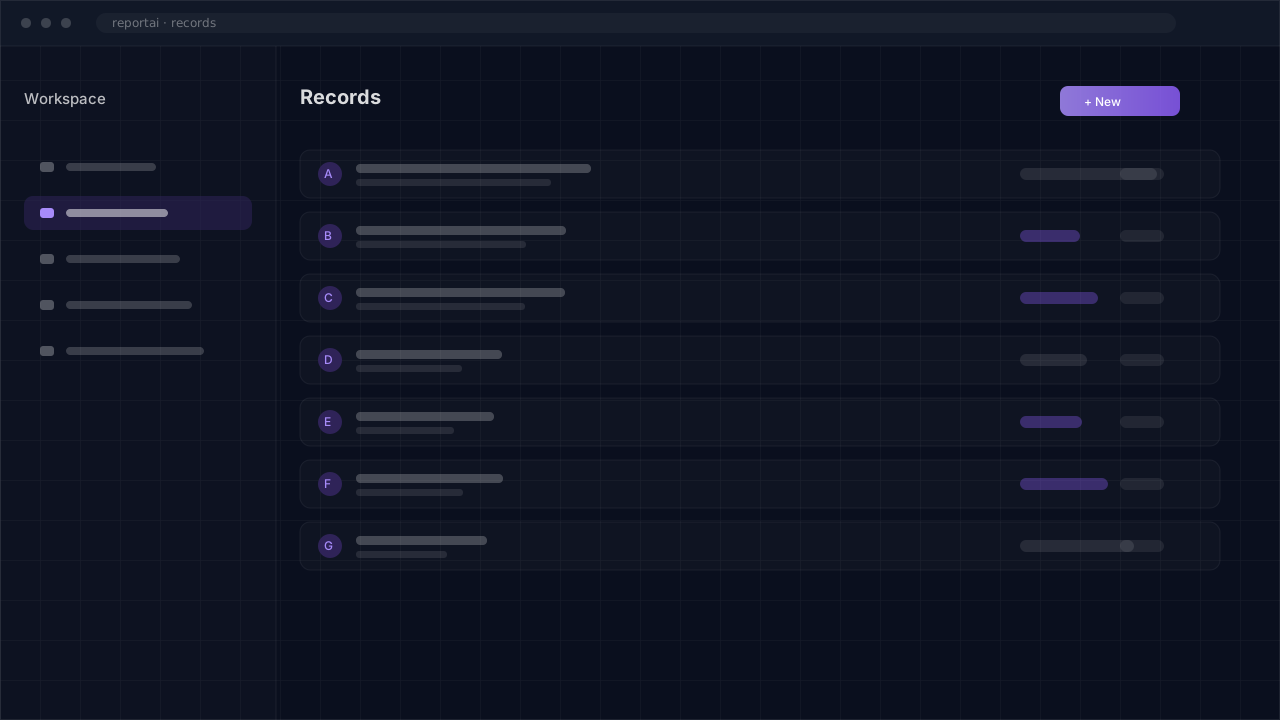
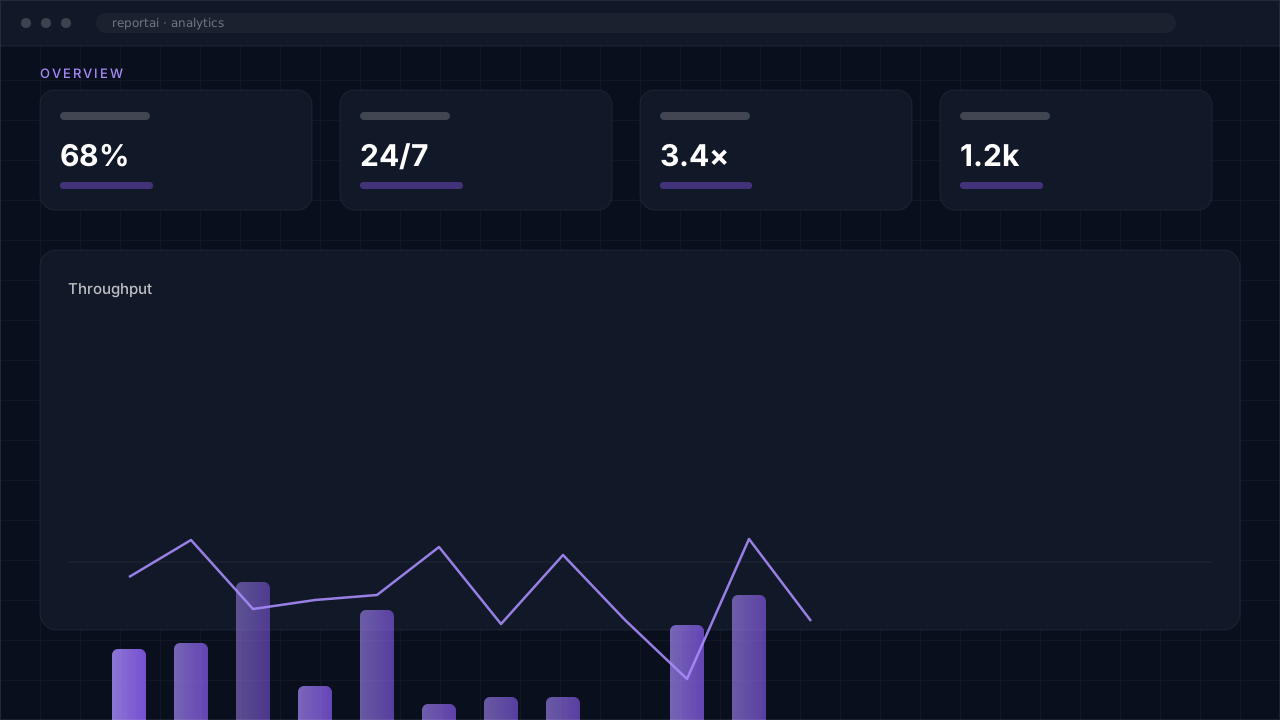
Screens from the delivered system.
Conclusion
ReportAI / ForensicReports transforms a fragmented due diligence process into a serverless, event-driven and AI-powered intelligence platform. The architecture combines AWS serverless infrastructure, asynchronous processing, external intelligence APIs and generative AI to create a scalable foundation for automated corporate due diligence — automated research across multiple intelligence and regulatory sources from one company request, Amazon Bedrock converting aggregated evidence into structured reports, SQS and Lambda decoupling user requests from long-running processing, retries and a Dead Letter Queue providing controlled failure handling, and S3 with DynamoDB providing durable reporting and lifecycle tracking.
More work
Other systems built on similar foundations.
AI / Voice / Multi-Agent
An intelligent multi-agent voice platform designed to automate business conversations and workflows.
View Case Study
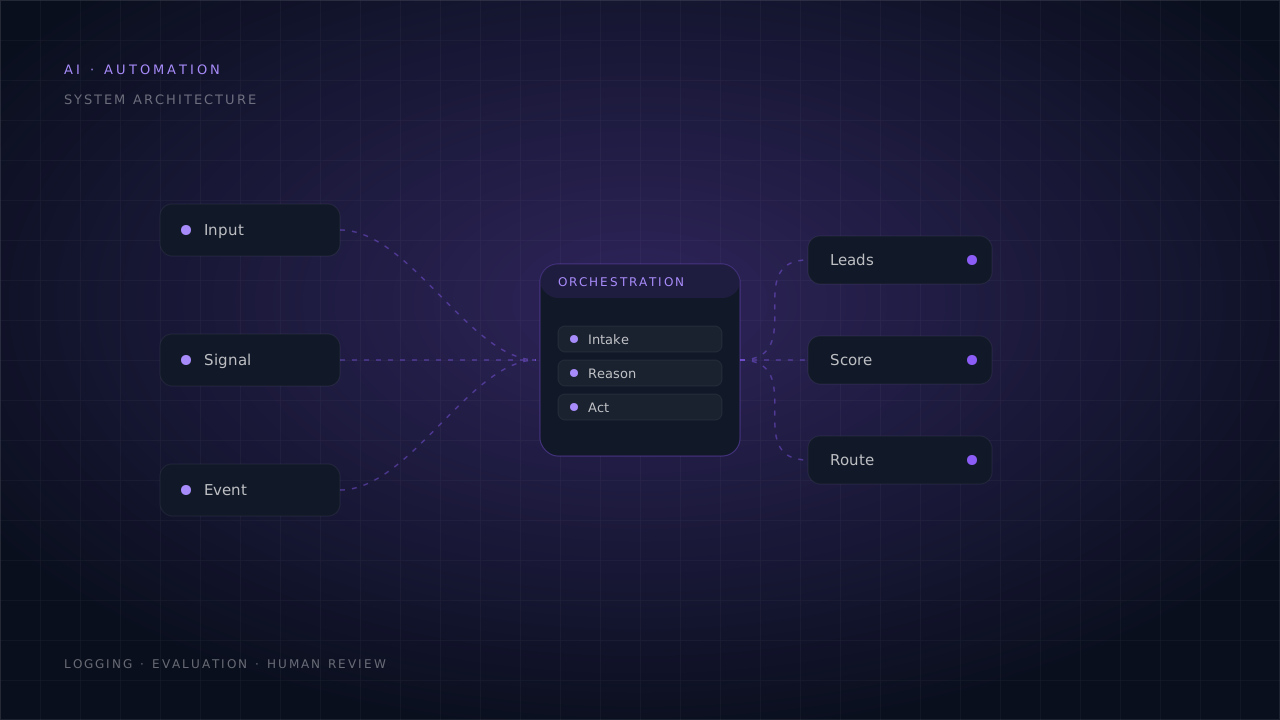
AI / Automation
An automated qualification and outreach engine that scores inbound leads, enriches them and routes each to the right owner within minutes.
View Case Study
Next step
Tell us what your business needs to automate and we'll map out a practical build.
hello@thedevrox.comWe reply to every enquiry within one business day.
 Python
 OpenAI
 n8n
n8n PostgreSQL