 React
React TypeScript
 Claude
 Node.js


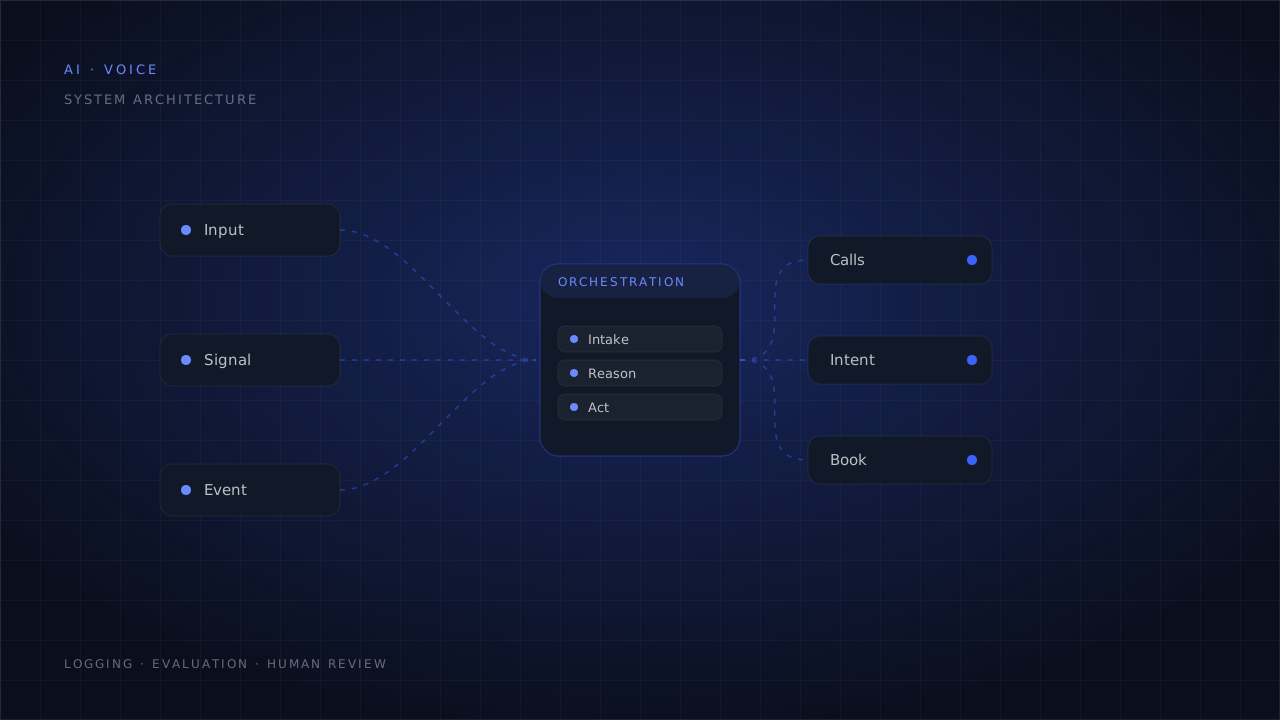
AI / Voice / Multi-Agent
VeriVoice
An intelligent multi-agent voice platform designed to automate business conversations and workflows.
- React
- Next.js
- Node.js
- AI
- +1
 Next.js
View Case Study
Case Study / AI / Automation
NexusOps / 14 weeks
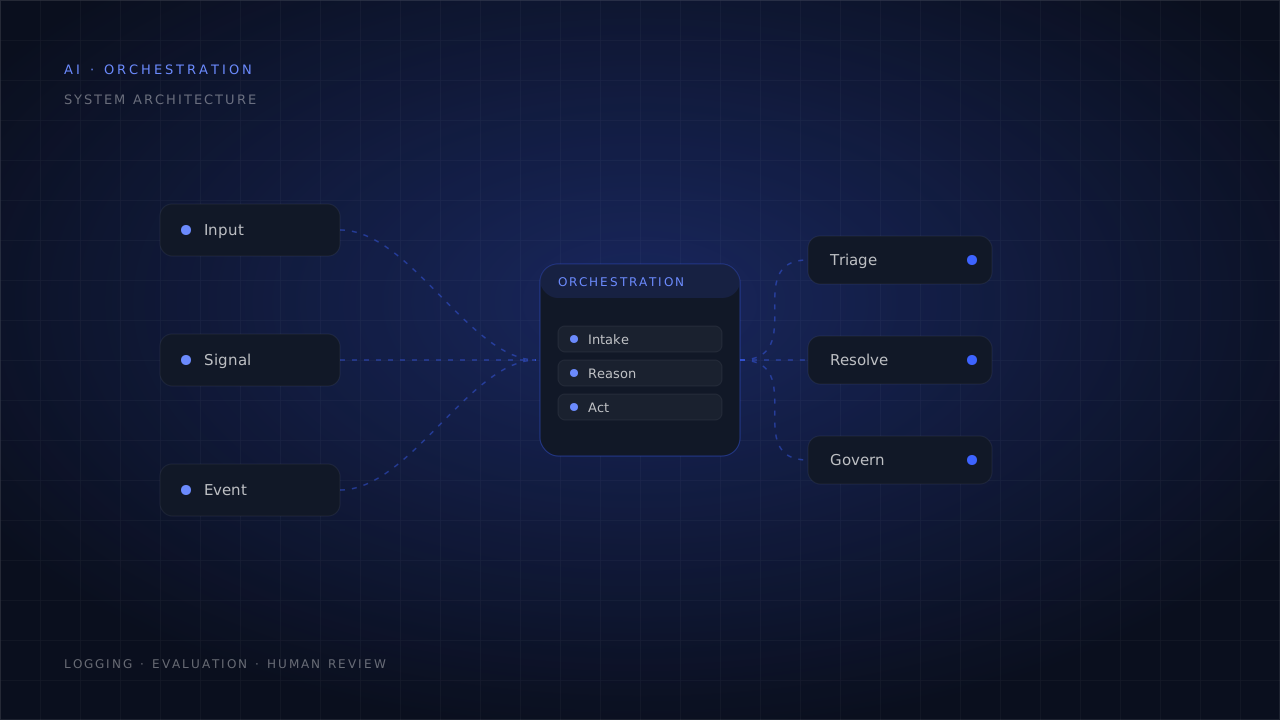
A multi-agent operations platform that triages support, qualifies sales leads and governs high-risk actions across omnichannel inbound traffic — with human sign-off on everything that matters.
Overview
An enterprise B2B SaaS platform serving high-stakes customers across Standard, Growth and Enterprise tiers with guaranteed SLAs. Support and sales engineering teams were overwhelmed by manual ticket routing and lead qualification, while every external integration failure silently dropped customer interactions until an engineer manually replayed them.
Challenge
The situation before the engagement, in the client's terms.
Manual triage, fragmented tools and unenforced governance meant slow escalations, unattended leads and silent integration failures for a high-SLA enterprise support operation.
Zendesk, HubSpot, internal wikis and Slack each held part of the customer picture, copied by hand.
Standard bots either hallucinated actions or failed on anything beyond keyword matching.
Refunds, patches and custom SLA terms had no formal approval mechanism before execution.
Rate limits and webhook drops failed workflows silently, dropping customer interactions.
Objectives
What the build needed to achieve before implementation began.
Route every inbound event by semantic intent instead of manual triage
Qualify sales leads with BANT scoring and live ARR sizing
Enforce human sign-off on every high-risk autonomous action
Survive connector failures with retry, backoff and circuit breaking
Keep a tamper-evident audit trail of every agent action
Solution Design
The approach that addressed each challenge above.
A deterministic multi-agent pipeline where every inbound event is classified semantically, resolved autonomously within hard safety boundaries, and paused for human sign-off the moment a boundary is approached.
A serialized step executor with promise barriers prevents race conditions between concurrent agents.
Claude Code structured inference with a deterministic local classifier as a crash-free fallback.
Confidence below 0.80, discounts above $1,000 and Sev-1 incidents pause until operator sign-off.
Three exponential-backoff retries per connector before a circuit breaker trips and alerts.
Live DAG topology, step-level telemetry traces and an immutable audit log for every action.
Capabilities
What NexusOps does in day-to-day use.
Aegis, Vanguard, Meridian and Apex hand off execution state across a verified directed acyclic graph.
Intent, confidence, sentiment and entity extraction decide the branch before any tool runs.
Low confidence, large concessions and production changes pause in an operator approval queue.
Exponential backoff retries and circuit breakers recover from rate limits and timeouts automatically.
Budget, authority, need and timeline scored with live ARR sizing and CRM pipeline provisioning.
Every prompt, tool invocation, payload change and operator decision recorded with resource IDs.
Technology Stack
Outcome
What changed for the business after launch.
78.4%
Autonomous containment rate
Inbound events resolved end-to-end without a human in the loop.
< 0.80
Confidence floor
Anything below the threshold pauses in the HITL approval queue.
4
Specialized agents
Triage, technical support, BANT sales and governance in one DAG.
3
Automated retries
Exponential backoff before a connector's circuit breaker trips.
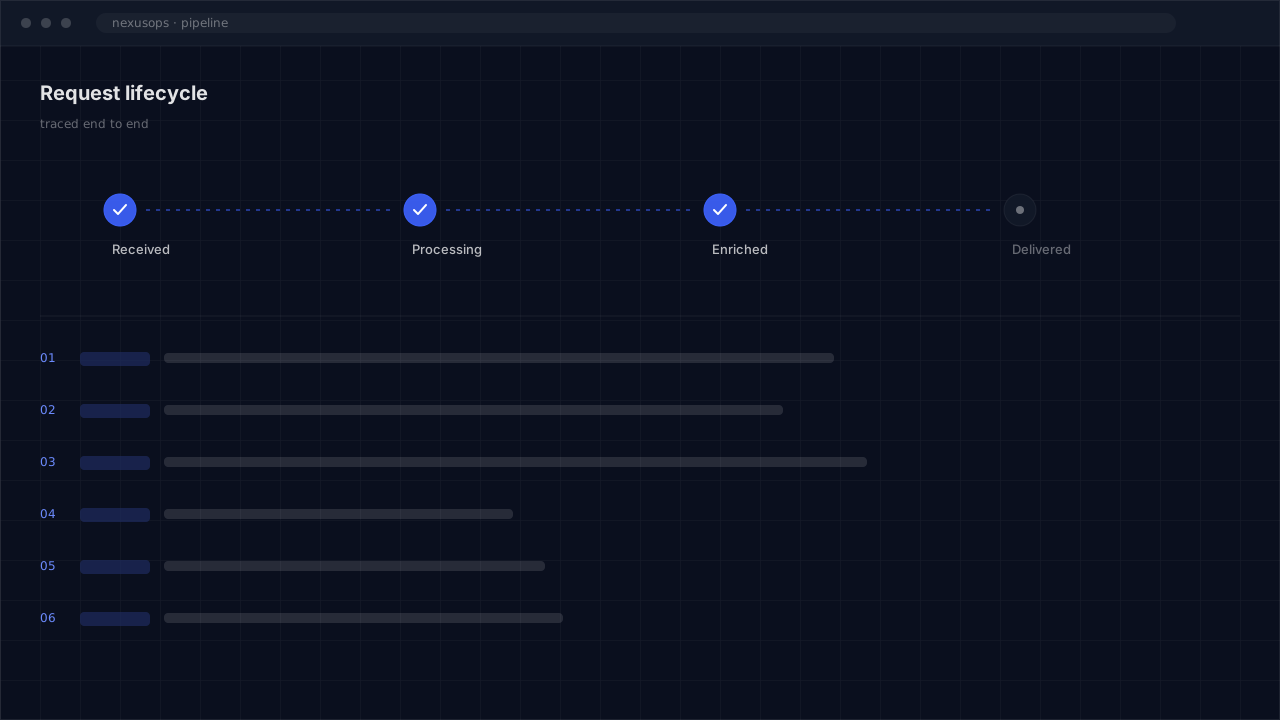
Interface
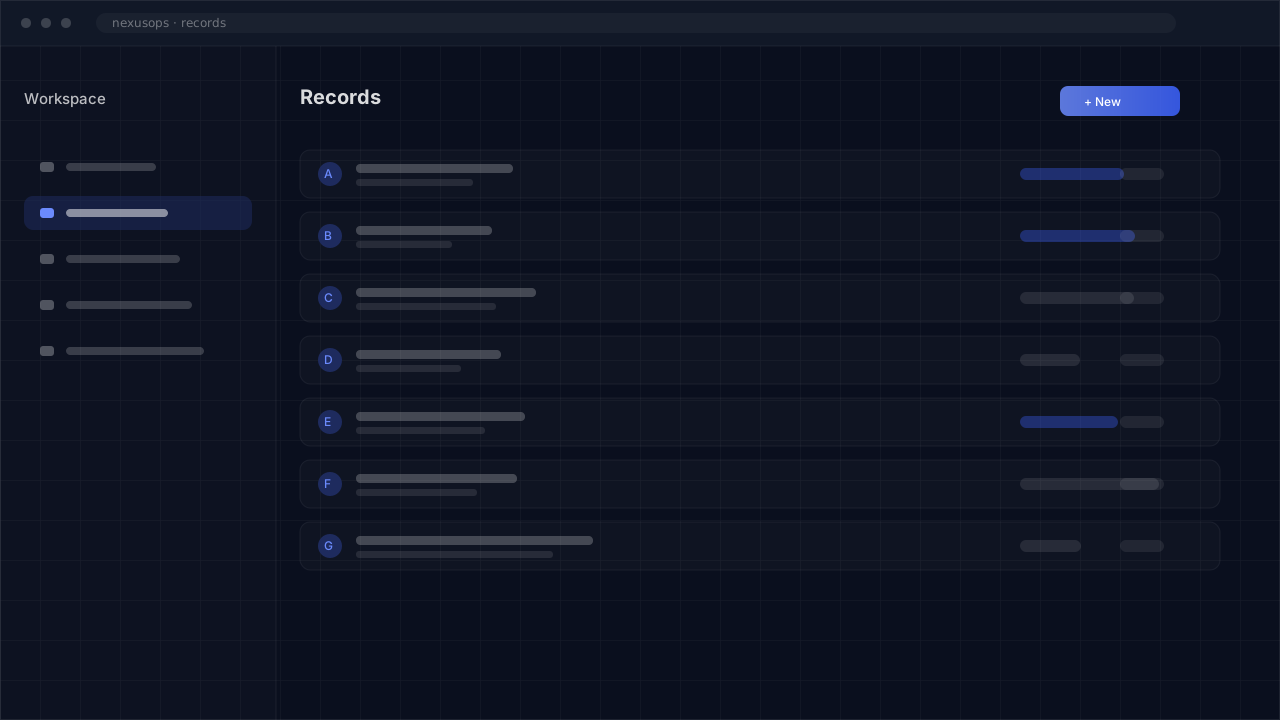
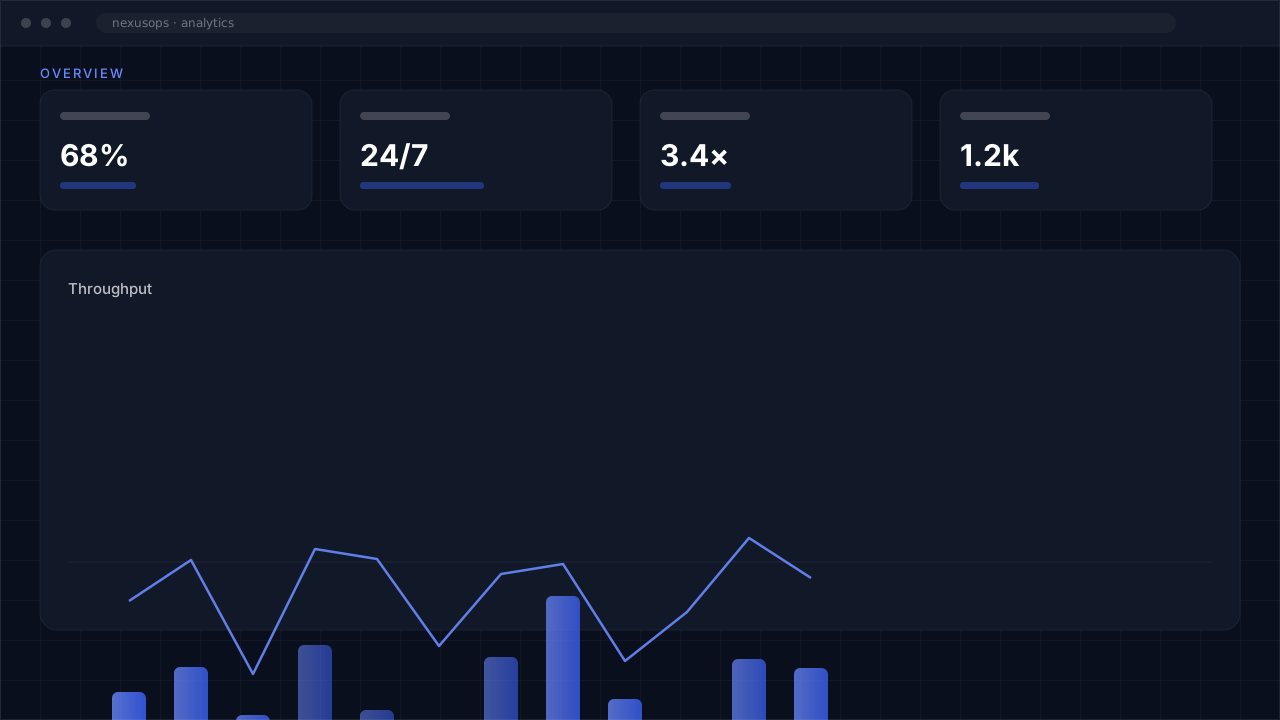
Screens from the delivered system.
Conclusion
NexusOps now runs every inbound event through a deterministic four-agent DAG: Aegis routes semantically, Vanguard resolves technical issues against the knowledge base, Meridian qualifies and sizes sales leads into the CRM pipeline, and Apex enforces governance — pausing any action with low confidence or high risk in a human approval queue. Every tool call is logged, every failure retries with exponential backoff, and the platform can be fault-tested live from its own connector hub.
More work
Other systems built on similar foundations.
AI / Voice / Multi-Agent
An intelligent multi-agent voice platform designed to automate business conversations and workflows.
View Case Study
SaaS / AI
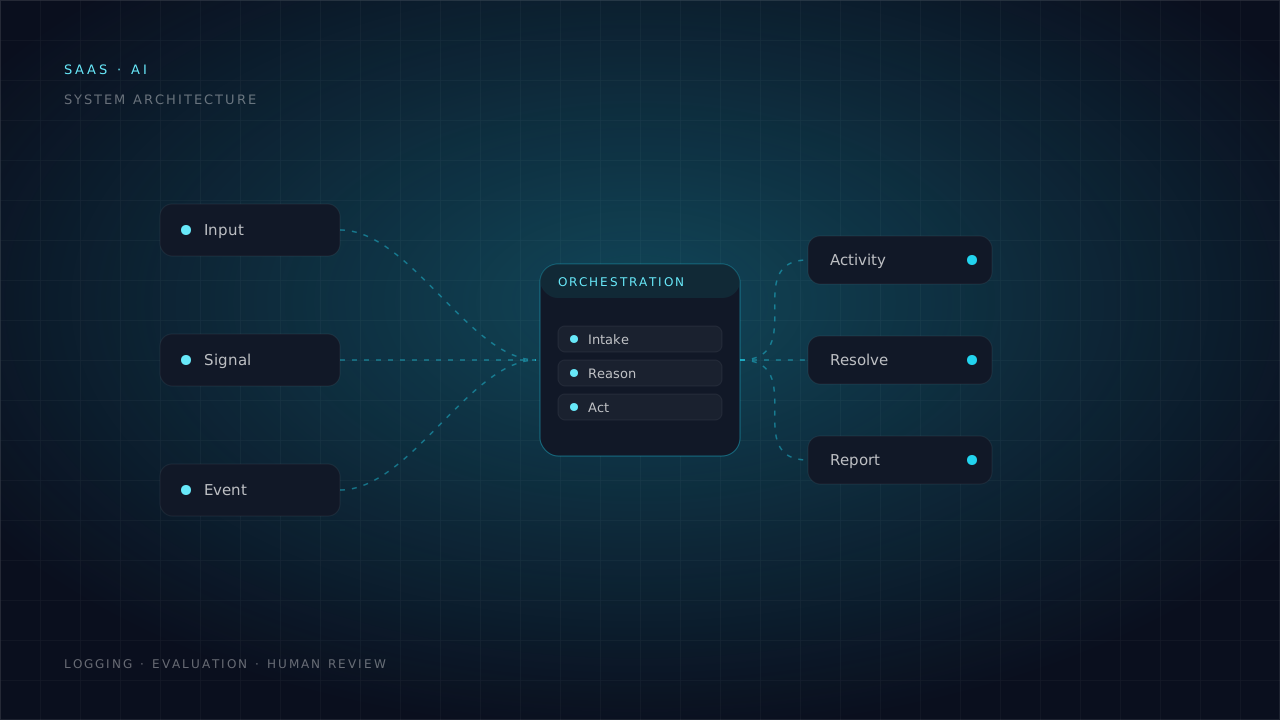
A multi-tenant CRM with AI assistance built into the record, summarising history and surfacing the next action for every account.
View Case Study
Next step
Tell us what your business needs to automate and we'll map out a practical build.
hello@thedevrox.comWe reply to every enquiry within one business day.
 PostgreSQL
 OpenAI